Florence · City
Florence made easy: small centre, long queues
Florence is small enough to cross on foot in a short walk, which is exactly why every visitor ends up queuing for the same handful of places at the same hours. The fix is simple: reserve the big ones, spread them across days, and keep an afternoon open for the quieter side of the river.

Banking, Medici and the roots of the Renaissance
Florence began as a Roman colony in 59 BC, but what you see today comes from a later chapter: medieval merchants and bankers whose gold florin financed much of Europe, and the Medici family, who ran the city and later the Grand Duchy of Tuscany. That wealth paid for the buildings and artworks that now fill its museums, which is why many historians call it the birthplace of the Renaissance. It was also Italy's capital from 1865 to 1871.
For a visitor, two things follow. The city is dense with art per square metre: one building can be a church, a museum and a family tomb at once. And the biggest masterpieces sit in just a few institutions, which cap how many people enter per hour.
The centre in four blocks
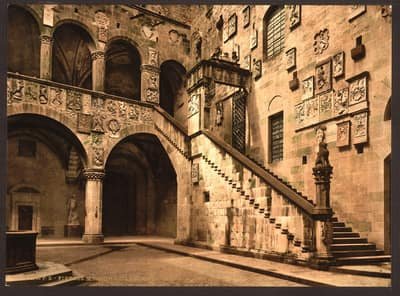
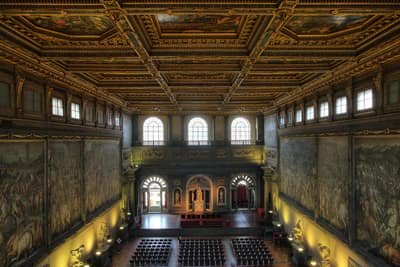
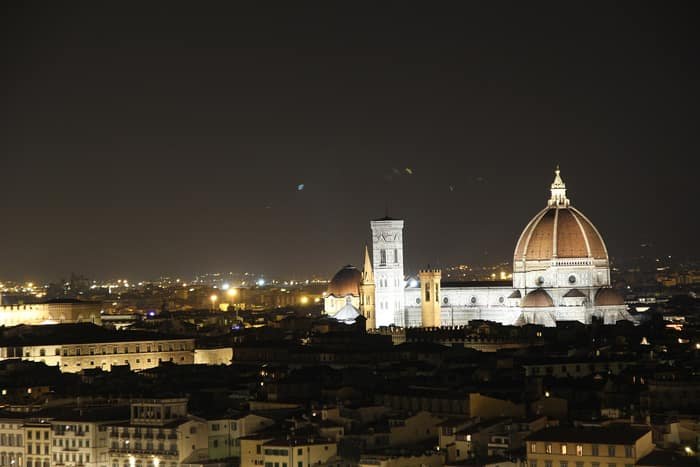
The Duomo block brings together the cathedral, the baptistery and the climb up Brunelleschi's Dome, done in timed slots and up a narrow staircase. Ten minutes away is Piazza della Signoria with Palazzo Vecchio, and right beside it the Uffizi quarter, home of the Uffizi Gallery. The Bargello Museum is a few steps off and is usually much calmer.
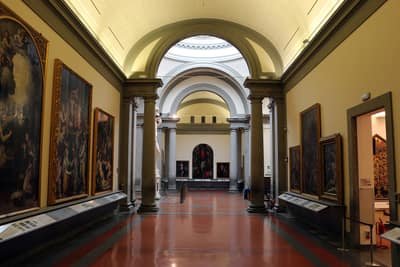
To the north, the Accademia Gallery shows Michelangelo's David in a short visit, and the Medici Chapels sit beside San Lorenzo. Across the Arno lies the Oltrarno, with the Pitti Palace and the Boboli Gardens, an excellent place to slow down.
What you can skip: going into every church or climbing every viewpoint. Ponte Vecchio is best enjoyed by simply walking across it, jewellery shops on both sides, and it needs only a few minutes. For the rest, squares and side streets work as pauses between one booking and the next, and that is where the city lets you look around without queuing.
How long Florence needs
Two days covers the essentials if you plan: one for the Duomo, Palazzo Vecchio and the Uffizi, another for the Accademia, the Medici Chapels and the Oltrarno. A suggested pace is in Florence in two days. With three days you have room for the Bargello, for a lunch where you do not watch the clock, and for a day trip.
If you plan to use Florence as a base, Pisa is a little over an hour away by train, while Siena and San Gimignano pair well in one outing, as in Siena and San Gimignano in one day. Still, one day alone is tight: with so many timed museums, the realistic move is to pick two and save the rest for another trip.
Tickets: what to book before you go
The first thing to sell out is usually the Dome climb, because each slot takes few people and the ascent is part of the visit. Next go the Uffizi and the Accademia: both are big museums, yet in high season the morning slots disappear weeks ahead. If you want to see the David without a long wait, a timed reservation is the sensible route.
The museums that tend to leave more room are the Bargello, Palazzo Vecchio and the Boboli Gardens, though on peak dates it is worth checking. Tickets are booked on an external site, Weekend in Italy, where you see prices, languages and availability. Start with the Dome and the Uffizi, then arrange everything else around those two fixed times so the schedule does not fight you.
Heat, hills and museum fatigue
Florence sits in a basin ringed by hills, with very hot summers and cold, damp winters. That shapes your plan: in July and August keep museums for the hottest hours and save the Oltrarno and the viewpoints for sunset. In winter rain is frequent, and museums double as shelter.
One last practical note: the climb to Piazzale Michelangelo and San Miniato al Monte is uphill, shorter than it looks but demanding after a day of museums. If your energy is low, a bus or taxi saves the stretch, and the sunset from up there makes up for it.
Tips before you go
- Check what your Duomo ticket covers. The cathedral interior, the Dome and other spaces in the complex can have separate entry. Read what each option includes before you pay.
- One big museum per morning. The Uffizi and the Accademia each take real time. Adding a third visit the same day is more tiring than it sounds.
- The David in the square is a copy. Piazza della Signoria has a replica. The original is in the Accademia Gallery.
- Limited traffic zone. The centre restricts car access (ZTL). If you arrive by car, park outside and walk in.
- Cross the river. Most visitors stay on the north side of the Arno. The Oltrarno has more space, less rush and good food.
- Check the weekly closing. Some museums close one day a week. Look before you reserve so you do not arrive at a locked door.
- Train from Santa Maria Novella. The station is next to the centre. It is the best base for Pisa, Siena or other towns without renting a car.

Frequently asked questions
How many days do I need in Florence?
Two days for the main sights, three if you want to go slowly or add a day trip to Pisa or Siena.
Do I need to book the Uffizi and the Accademia?
It is wise to, especially for morning slots and in high season. The booking page shows availability by date.
Can I climb the Dome without a reservation?
Entry is normally by reserved time slot, so turning up without one usually means missing out. Book early.
Is Florence a walkable city?
Yes, the centre is compact and best seen on foot. You only need transport for a viewpoint or a day trip.
What should I see in Florence with half a day?
Walk between the Duomo and Piazza della Signoria, cross Ponte Vecchio and enter one museum with a reservation, ideally the Uffizi or the Accademia.
Affiliate link: if you book, this site may receive a commission.