Sicily · Island and destination
Sicily is not a city: how to plan the island without losing days
Sicily is the largest island in the Mediterranean and should be planned like a small country, not a city. This guide centres on Palermo, Monreale and Agrigento, tells you how many days you actually need and makes one thing clear: here there are only two bookable attractions, the Valley of the Temples and Monreale Cathedral.
An island, not a stop: how to read the map
It is the largest and most populous island in the Mediterranean, and the classic mistake is treating it as one more leg of an Italian trip. Palermo is in the northwest, Agrigento in the south and Syracuse, Catania and Etna in the east. Between one end and the other lie hours of road, and trains and buses do not always shorten them.
Each area has its own character, the product of a long history: Greek colonies, Arab rule and, from the 11th century, Norman rule, which blended it all. That is why you should choose well what to do instead of trying to see everything. To get there, flights run from several Italian cities, and if you are coming from Naples there are ferry connections; check operator and season.
Palermo and Monreale: where the island blends
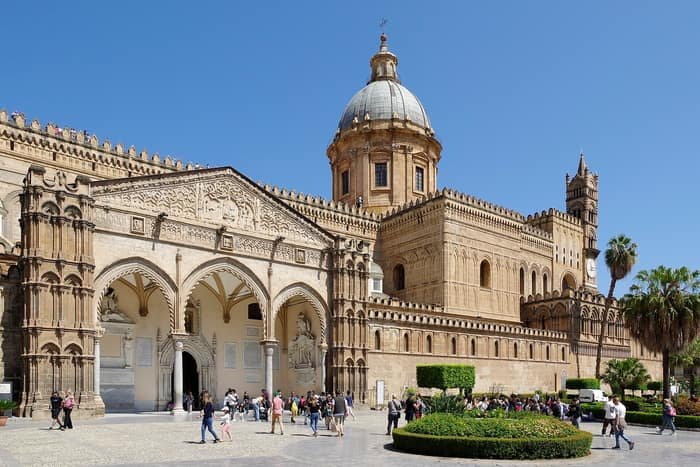
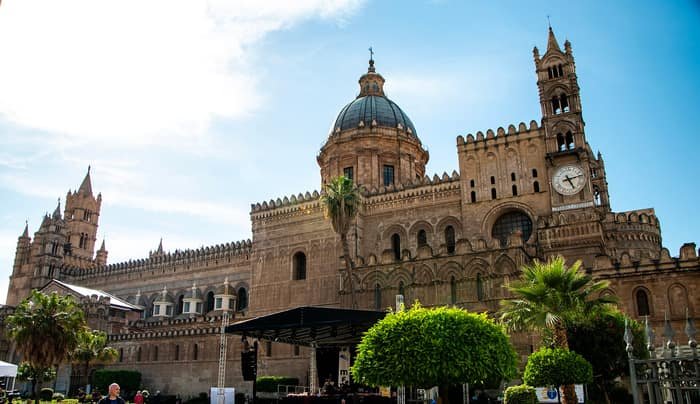
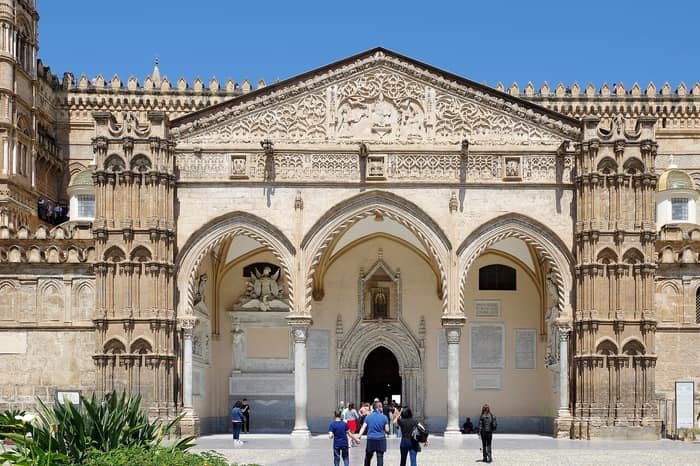
Palermo is the island's great capital and is explored in layers: street markets, Baroque churches and the Norman Palace with its mosaic chapel. The Arab-Norman mix of its monuments is recognised by UNESCO and looks like nowhere else. It is an intense, somewhat chaotic city, and works best taken slowly.
A few kilometres away, Monreale Cathedral is the essential excursion from Palermo. It is a 12th-century Norman church whose interior is covered in golden mosaics with biblical scenes; it is hard to look away. You get there by bus from Palermo (check the current service), and with the adjoining cloister the visit fills a comfortable morning.
For food, the street leads: arancine, panelle and pasta with sardines are Palermo classics, and neighbourhood trattorie are usually better than places with menus in five languages. Order what has a queue of locals and do not be alarmed if you are served more than you expected.
Agrigento and the Valley of the Temples
The Greeks founded Akragas here, one of the richest colonies in Sicily, and the Valley of the Temples preserves several Doric temples on a ridge overlooking the sea. Despite the name it is not a valley, and walking it means a good deal of distance with very little shade. Start early or visit in the late afternoon, when the stone turns golden and the heat eases.
The best-preserved temple is the Temple of Concordia, and the fallen remains of the Temple of Zeus give an idea of the scale of the site. Carry water, a hat and closed shoes; the ground is uneven. If you want shade, there is a citrus garden inside the grounds.
The grounds have more than one entrance, so look at the map before you park to avoid walking more than needed. Note that the town of Agrigento sits uphill, a few minutes from the park; sleeping nearby lets you enter first thing and leave before midday.
How long to give Sicily
A week is not enough for the whole island, and it is better to accept that. With four days you can do Palermo, Monreale and Agrigento; with seven you can add part of the east, such as Syracuse and its island of Ortigia, Taormina or an excursion to Etna, the tallest active volcano in Europe. With only three days, stay in one area and do not cross the island.
Renting a car gives freedom, but driving in Palermo is not for everyone; many travellers combine the city on foot with a car only for the rest. To fit the island into a longer trip, see the guide to Rome as a flight starting point.
A reasonable split: two nights in Palermo with the Monreale excursion, one night in or near Agrigento to see the Valley unhurried and, if you have days left, the east. Always keep a spare day; journeys and surprises will thank you.
Tickets: only two attractions can be booked here
Let us be clear: of all Sicily, on this site you can only reserve tickets for the Valley of the Temples and for Monreale Cathedral. Those two are worth having sorted beforehand, especially the Valley in high season, because the visit depends on the hour and the heat. Other places, such as the Norman Palace, Syracuse or Etna, are not listed here; check their official sites.
Tickets are booked on an external site, Weekend in Italy, where you can see prices, times and availability. Check what each option includes, because at Monreale there can be separate tickets for the cathedral and the cloister.
Tips before you go
- Pick one area. With few days, concentrate on the west or the east. Crossing the island eats up whole days.
- Count distances in hours. Do not measure journeys in kilometres. Inland roads are slow and trains infrequent.
- Valley of the Temples first thing. The sun is strong and there is almost no shade. Starting early avoids the worst of the heat.
- Monreale on a clear morning. The mosaics glow in natural light. It is best to go in the morning, when light comes through the windows.
- Dress for churches. Cathedrals and monasteries usually ask for covered shoulders and knees.
- Mind the summer. July and August can be very hot. Spring and autumn are better for walking.
Frequently asked questions
How many days do you need in Sicily?
Between four and seven. With less, choose one area instead of trying to cover the whole island.
Which Sicilian attractions can be booked here?
Only two: the Valley of the Temples in Agrigento and Monreale Cathedral.
Do you need a car?
To move between cities without depending on timetables, it helps a lot. In Palermo, go on foot and by public transport.
Can you see Monreale from Palermo in a morning?
Yes. It is close, reached by bus (check times), and the visit fills a relaxed morning.
What is the best season?
Spring and autumn. In summer the heat can be fierce at places like the Valley of the Temples.

Affiliate link: if you book, this site may receive a commission.

