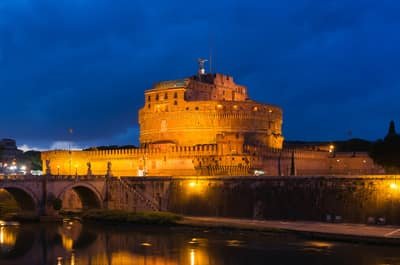
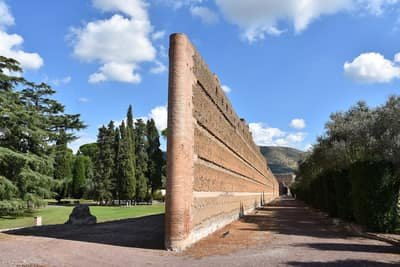
Rome · Underground imperial palace
Domus Aurea, the Golden House Rome buried
Rome's most unusual palace is underground. After the fire of AD 64, Nero built a vast pleasure complex in the middle of the city; within a few decades it was stripped, filled with earth and built over. That act of erasure is why painted rooms survive today, visited in small timed groups that you have to book ahead.
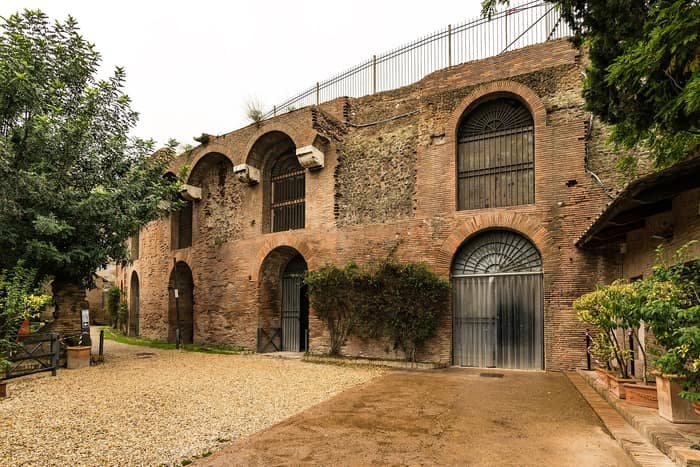
A palace saved by being demolished
The Domus Aurea, Latin for 'Golden House', was built largely on the Oppian Hill after the fire of AD 64 destroyed a large part of Rome. It went up at remarkable speed and was nearly finished when Nero died in 68. According to Tacitus he cared about every detail and oversaw the engineer-architects Celer and Severus.
To his successors it was a symbol of excess and an embarrassment. Within about a decade the palace had lost its marble, jewels and ivory, and much of the complex was filled with earth so that new buildings could stand on top: baths, the Temple of Venus and Roma and, on the site of the artificial lake, the amphitheatre you now know as the Colosseum. The irony is that all that earth kept moisture away from the paintings for centuries.
What is inside, and what is not
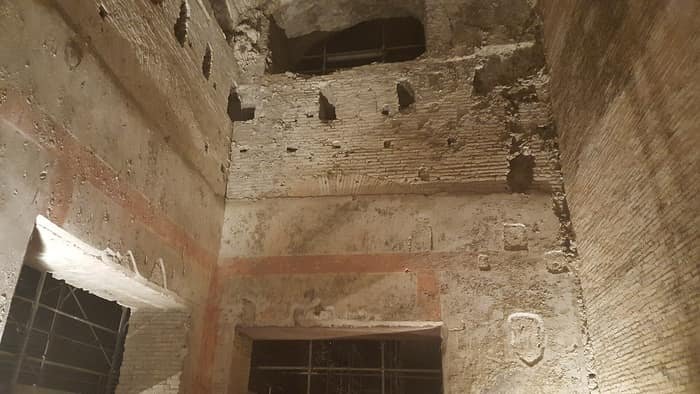
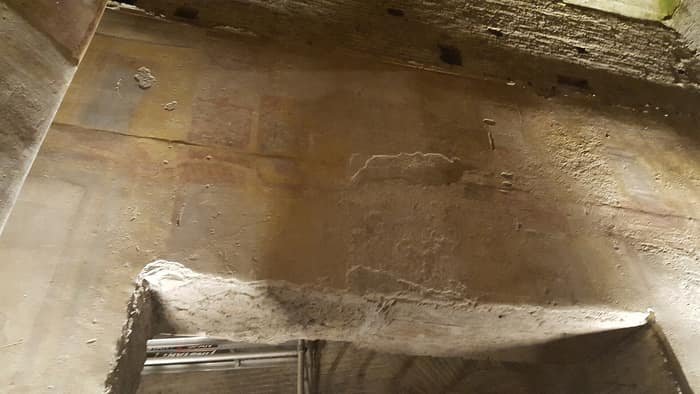
The site has more than 150 rooms and only about a third are open to the public. Do not expect a furnished palace: these are vaulted halls, corridors and fragments of painted decoration, and your imagination does part of the work. What does come across is the scale, and the oddity of finding all this under a park, a few minutes from the Colosseum.
The condition of the building explains why access is so tightly managed. Since its rediscovery, humidity inside has reached very high levels, parts of the structure have come down (a gallery vault collapsed in 2010), and the complex closed and reopened several times before reopening in 2014. That is why groups are small.
The first tourists came down on ropes
At the end of the 15th century a young Roman fell through a crack in the Esquiline hillside and landed in a cave full of painted figures. Soon young artists were being lowered on boards tied to ropes. Those decorations, the grotteschi (the name comes from grotta, cave), electrified the early Renaissance. Raphael and Michelangelo went down to study them, and the echo shows in Raphael's loggias at the Vatican Museums.
The graffiti left by those visitors include signatures of Ghirlandaio, Filippino Lippi and Martin van Heemskerck, and also Casanova and the Marquis de Sade, scratched a few inches apart on the same fresco.
Booking is the hard part
Tickets are sold by time slot for small groups, so turning up without a reservation is not a plan. The visit is also not offered every day, and languages may be limited. Tickets are booked on an outside site, Weekend in Italy, where you see dates, slots, languages and prices. Read the change and cancellation terms before you pay.
If you only have a few days in Rome, lock in this visit first and build the rest around it; the three-day itinerary is a good base.
Tips before you go
- Fix this slot first. It is the least flexible item on a Rome trip. Choose the day and time for the Domus Aurea and plan everything else around it.
- Bring a light layer. It is underground and damp, and feels cooler than outside even in summer.
- Arrive with time to spare. Groups are small and leave on schedule. A late arrival cannot be made up.
- Wear shoes with grip. Floors are uneven and there are changes of level. Slippery sandals are a poor idea.
- Do not expect furnished rooms. You see vaults and painted fragments. You come for the space and the story, not for displayed objects.
- Check your email after booking. Confirmation can arrive a little later. Save it and check spam before you travel.
- Space this away from the Colosseum. They are close, but leaving a gap between the two avoids rushing and missing your slot.
- Ask about accessibility. The route has changes of level; if you need an accessible route, check conditions before buying.
Frequently asked questions
Can I visit the Domus Aurea without a reservation?
In practice it is not worth trying: entry is by timed slot in small groups. Book ahead and check availability on the booking page.
How long does the visit take?
Allow a little over an hour from arrival to leaving, but confirm the exact length of the slot when you book.
Did Nero actually live here?
Not exactly. His main residence stayed on the Palatine; this complex was for time in the gardens and for banquets where he received the people of Rome.
Why are the groups so small?
Conservation. Humidity and the weight of earth above have damaged the building, so access is limited and controlled.
What language are the visits in?
They are usually offered in Italian and English. The booking page shows the language of each slot.
Affiliate link: if you book, this site may receive a commission.